Follow palashbiswaskl on Twitter

PalahBiswas On Unique Identity No1.mpg

Unique Identity Number2

Please send the LINK to your Addresslist and send me every update, event, development,documents and FEEDBACK . just mail to palashbiswaskl@gmail.com

Website templates

Zia clarifies his timing of declaration of independence

What Mujib Said

Jyoti Basu is dead

Dr.BR Ambedkar

Memories of Another day

Memories of Another day
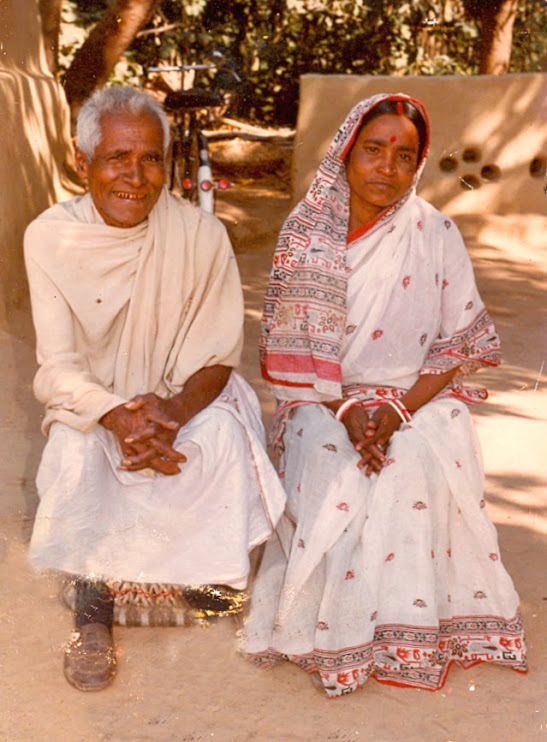
While my Parents Pulin babu and Basanti Devi were living

Monday, August 1, 2011

भारी बजट के बावजूद प्यासे हैं गाँव By जगमोहन रौतेला on August 1, 2010

For Nainital Samachar Members

हरेला अंक-2010

जयदीप लघु उद्योग
खेती-बाड़ी से जुड़ा है हरेला त्यौहारखेती-बाड़ी से जुड़ा है हरेला त्यौहार
लैंसडाउन ने बाबा नागार्जुन को याद कियालैंसडाउन ने बाबा नागार्जुन को याद किया
पूरन चन्द्र चन्दोला का गिरजा हर्बल फार्मपूरन चन्द्र चन्दोला का गिरजा हर्बल फार्म
पानी के दिनपानी के दिन
नन्दाखाट चोटी फतह कर लौटे पर्वतारोहियों की चिन्ता वाजिब हैनन्दाखाट चोटी फतह कर लौटे पर्वतारोहियों की चिन्ता वाजिब है
याद रहेंगे पत्तीदास
जल विद्युत परियोजनाओं से त्रस्त किसानजल विद्युत परियोजनाओं से त्रस्त किसान
एक प्रखर व प्रतिभाशाली पत्रकार के जीवन की अतिंम यात्राएक प्रखर व प्रतिभाशाली पत्रकार के जीवन की अतिंम यात्रा
बस दुर्घटना ने खोली आपदा प्रबंधन की कलई

होली अंक -2010

निर्मल पांडे: कहाँ से आया कहाँ गया वोनिर्मल पांडे: कहाँ से आया कहाँ गया वो
''तब के आई.सी.एस. साइकिल पर जाते थे या फिर इक्के पर''''तब के आई.सी.एस. साइकिल पर जाते थे या फिर इक्के पर''
शराब माफिया व प्रशासन के खिलाफ उग्र आन्दोलन की तैयारीशराब माफिया व प्रशासन के खिलाफ उग्र आन्दोलन की तैयारी
'कैंपेन फार ज्यूडिशियल एकांउटेबिलिटी एण्ड रिफार्म्स' का तीसरा राष्ट्रीय अधिवेशन'कैंपेन फार ज्यूडिशियल एकांउटेबिलिटी एण्ड रिफार्म्स' का तीसरा राष्ट्रीय अधिवेशन
नहीं भुलाया जा सकता चन्द्रसिंह शाही का योगदान
अपने मजे का मजा ठैरा दाज्यूअपने मजे का मजा ठैरा दाज्यू
उत्तराखंड में माओवाद या माओवाद का भूत ? !!उत्तराखंड में माओवाद या माओवाद का भूत ? !!
नियम विरुद्ध करवाए गए सरमोली-जैंती वन पंचायत चुनावनियम विरुद्ध करवाए गए सरमोली-जैंती वन पंचायत चुनाव
क्यों बढ़ रहा है मनुष्य व जंगली जानवरों के बीच संघर्ष ?क्यों बढ़ रहा है मनुष्य व जंगली जानवरों के बीच संघर्ष ?
दुःखद है ऐसे प्रकृतिप्रेमियों का जानादुःखद है ऐसे प्रकृतिप्रेमियों का जाना

KRAS FOR GOVERNMENT A Glimmer Of Glasnost The ministerial performance appraisal system is a step in the right direction. But it will need a lot of finetuning to succeed. KANDULA SUBRAMANIAM

JITENDER GUPTA
KRAS FOR GOVERNMENT
A Glimmer Of Glasnost
The ministerial performance appraisal system is a step in the right direction. But it will need a lot of finetuning to succeed.


Bottom Line

  • Administrative Reforms Commission highlights the need for a new performance management system in government. In July 2009 UPA II makes this a priority.
  • 6th Pay Commission recommends performance related incentive scheme for government officials.
  • Exercise for performance kicks off, in 2009, with 59 ministries drawing out their objectives and results. 80 ministries are now participating.
  • Joint targets to be set in 2011. Soon, bonuses to be given for achieving targets.

***

Do the citizens of a democracy have the right to know how their government functions? "No. They have a right to be ignorant. Knowledge only means complicity in guilt; ignorance has a certain dignity". That's what Sir Humphrey Appleby, the crafty bureaucrat in 'Yes Minister', the British television series of the 80s, had to say on the matter. Of course, no bureaucrat would ever admit to harbouring such beliefs, but deep down, many may very well agree with Sir Humphrey.

And some may be actively subscribing to that philosophy—even though the Right to Information (RTI) Act was passed in 2005, getting all the information you want from the government continues to be a challenging task to this day.

Now, imagine having a system where the performance of ministries—populated and run by bureaucrats—is assessed and published each year. It's the sort of thing that would have given Sir Humphrey an apoplectic fit. But, in an effort to make governance transparent, that's exactly what the UPA II regime is aiming to do for each of its nearly 100 ministries and departments. The idea is to show the public the direction in which the government is headed and enable corrective action where needed.

This exercise was launched in 2009 and involved around 59 ministries. A performance management department was created in the cabinet secretariat to implement the plan. Today, as many as 80 ministries and departments are participating in the appraisal exercise.

"The concept is very simple," says Prajapati Trivedi, Secretary of the performance management unit. Keeping the overall objectives of the government in view, each ministry outlines its objectives, action points and quantifiable deliverables for the year, with the approval of the concerned minister. These are spelt out clearly in a Result framework Document (RfD). The targets are frozen after approval by the Finance Ministry and the Planning Commission—for matters such as fund allocation—and in consultation with an independent panel of experts consisting of retired officials and eminent professionals. At the end of the year, the ministry's performance is assessed on the basis of outcomes vis-à-vis the targets set during the year.

Challenges In Execution

Conceptually, the system is similar to the annual performance appraisals corporates have to assess employees in key result areas. However, with the exception of entities such as PSUs, governmental appraisals are largely not bottom line driven, and it is therefore difficult to quantify them.

Arun Maira, Member, Planning Commission, who brought his corporate experience to bear in the design of the performance management system, says it is not easy to have quantifiable targets in government. In other words, while it is possible to set tangible targets for the roads ministry, doing so for ministries such as, say, home, won't be easy.

Economist Bibek Debroy, is skeptical about how the new system would work. Debroy says nothing much has come out of the entire outcome budget exercise started during the previous stint of the UPA regime. He believes that the success of the entire system hinges on how states implement the centre's schemes. After all most central schemes are social schemes that are expenditure driven. And if that is taken as the yardstick for success, then the new system won't work.

A former bureaucrat from the Defence Ministry has raised another very pertinent point: what exactly constitutes "performance?" As a custodian of national interest, a bureaucrat can come across instances where he is asked to clear proposals that may not be needed in the first place. "Does sitting on such proposals amount to non-performance?" he asks.

For instance, a few years ago, a defence establishment in Bangalore wanted to set up huge, expensive gensets in its facility when there were cheaper alternatives available. The proposal was stuck after a bureaucrat didn't agree to this expenditure. Much later, the PSU was able to use a far more economical alternative. The bureaucrat's calculated intransigence thus helped the defence unit save a great deal of money. But in an appraisal, the PSU could very well be labelled a non-performer for not implementing its initial plan. On the other hand, it could also be considered a performer if it had gone ahead with the genset plan. This is just one kind of complication that could arise during evaluation. And even more difficult to assess are outcomes that can't be achieved by a ministry or department singularly.

For instance, the performance of the Power Ministry is incumbent on cooperation from the coal and environment ministries. The ministry may add capacity but may not have fuel to run the plants. Would it therefore be a non-performer? We looked at the RfDs of the Power and Coal ministries and found that their targets were not in sync. For instance, the Power Ministry's RfD says it needs "supply of 366 million tons of coal" during the year (2010-11) from CIL to meet its objectives. The Coal Ministry, on the other hand, has listed its supply target as 335 Million Tonnes in its RfD. Such variations need to be eliminated if these inter-dependent ministries are to work well together. This is particularly important for the Labour Department, whose RfD states that all the welfare schemes of the Rural Development, Urban Affairs and Poverty Alleviation, Railways, Women & Child Development ministries need to converge if child labour is to be eliminated. That's Sir Humphrey emerging from the rubble. Compounding the matter, bureaucrats already have an existing assessment system in the form of their annual confidential report (ACR). Simply put, the ACR decides if their careers advance or stall, as the case may be. Understandably perhaps, a bureaucrat may be more concerned about his individual performance rather than that of the department as a whole.

Former Cabinet Secretary KM Chandrasekhar (see interview on page 28), who has played a key role in implementing the performance management system, allays such fears. He says that while the ACR system needs an overhaul, the new system will be an "adjunct" to it. Meaning, an official's efforts to lift his department's performance will reflect in the ACR as is the usual system.

Top To Bottom

That's not all; the government is also planning to encourage performance by offering incentives to every single employee of the department, from the secretary right down to the driver, says Trivedi. However, the incentive can only be availed when the department makes a saving after achieving its annual targets, explains Chandrasekhar. Incentives, along with ACRs reflecting an official's contribution to a department, will help make the performance exercise acceptable. Trivedi adds that a transparent target-setting mechanism would make it hard to include any schemes or proposals that are not in the interest of the department or the nation. The entire mechanism is geared towards ensuring that targets are scaled up and in sync with the overall goals of the government. Starting this year, the performance management cell is launching a concept of team targets to resolve the problem of inter-ministerial cooperation. So, for example, the Power, Coal, Railways, and Environment Ministry will have to sit down and collectively agree on targets. Non-achievement will mean no points for all concerned. While this is an important step forward, setting targets is the last step in this exercise, says Maira. According to him, ascertaining the views of all the stakeholders, right down to citizens' groups, is crucial to developing a good model of performance assessment. If not, he explains, there are bound to be gaps. Citing the example of a car manufacturer, he says all the components going into a car may have an "OK' certificate, but this may not be the view of the final buyer.

To be fair, the entire performance management process is still at a nascent stage. It is for this reason that performance results in the years 2009 and 2010 were not made public. If all goes well, the results will be made public from 2011, and, hopefully, usher in a new era in governance.

INTERVIEW
The government has started a performance management system to make functioning result oriented. Former cabinet secretary KM Chandrasekhar spoke to Kandula Subramaniam on the new system.
KANDULA SUBRAMANIAM

INTERVIEW "If There Is No Objective For A Ministry, There Is No Reason For A Ministry" The government has started a performance management system to make functioning result oriented. Former cabinet secretary KM Chandrasekhar spoke to Kandula Subraman

VISHAL KOUL
INTERVIEW
"If There Is No Objective For A Ministry, There Is No Reason For A Ministry"
The government has started a performance management system to make functioning result oriented. Former cabinet secretary KM Chandrasekhar spoke to Kandula Subramaniam on the new system.


What is the rationale behind the new performance management system?

We, in the government, tend to be highly reactive in our work. We must be proactive if we have to achieve results. We really do not get the time to apply ourselves to setting objectives for ourselves. If, at the beginning of the year, we set goals and those below us agree with the goals, then we are moving towards "something." There is a sense of direction and purpose.

But setting goals in government can be tricky affair especially where it is difficult to quantify them…

It's not cast in stone. At a particular point there may be a crisis that hits you. Then you will have to change course. Now, this mechanism has been built into the performance management system. We can change course and change goals. At the end of the year, whatever you set for yourself should be physically quantifiable. At the end of the year you know that this is the result. Initially there will be difficulties. You will find some officers set high goals for themselves but will not be able to achieve these.

Can you give any instances?

I don't think there are any particular examples. We have just started this exercise and we have only done one quarter. The results for the evaluation done in 2010-11 will be released anytime soon (62 ministries). What we have found is that sometimes the goals themselves are limited, in which case the achievement can be very high. Therefore what we have done is we have brought in experts, academics and retired officers so that their inputs come in during the goal setting exercise. The overall idea is that we start this exercise of putting goals for ourselves (senior officers) and also for subordinate officers.

How do you distinguish between goals and the vision for a ministry?

A vision is a charter. There are two things that one has to understand: the first is setting annual goals. We are also working on a five-year strategy that will set the overall goals to be achieved over the next five years. And this is not a Planning Commission exercise. Also there are different sectors in the government.

It is easy to have targets in some ministries and not so in others. Can you throw more light on this matter?

Last year, we took about 62 ministries. And this year, the number could be 75-80. If it is the Finance Ministry or Home Ministry, these are very large ministries to have one set of goals. They have to be broken up into separate departments.

These ministries are currently not part of the performance exercise. But when they join, what parameters will they adopt?

We are going phase by phase. Each ministry will have to set its own goals. What health sets will not be the same for, say, tourism.

What about Defence? The cabinet secretariat, PMO…

Defence would also have to set its goals. You can have goals such as "we will strengthen our defence apparatus by a certain level." However, they may not make these goals available to the public. Setting goals for themselves would help them move forward. We will start this exercise for the Cabinet secretariat this year. But we cannot ask the PMO. For any secret organisation, they will have to do it themselves.


What we are trying is to introduce a mechanism similar to the one introduced in PSUs over a decade ago.
 
 
While this initiative is good and the government is keen on implementing it, there is a sense that not all departments are too keen on setting goals and chartering visions for themselves…

Basically, this exercise is an instrument for them to use. The ministries that have participated actively seem to be very happy with this system. That said, now that a year has passed, we need to talk to them (ministries) and get feedback. It is not only the Central government; some states are coming forward and are taking interest in this system. States like Maharashtra, Punjab and Himachal Pradesh have shown interest. Even our neighbours Sri Lanka and Bhutan have shown interest.

Our existing system of government is structured in a particular manner and has grown like this over the years. Given this, how can a ministry like sports have targets when some of the most crucial activities don't come under it (like IOA and even CWG)?

Many things don't come under you. But then you are supposed to be the catalytic force that will make things happen. Otherwise there's no raison d'être for the ministry itself. If there is no objective, then there is no reason for a ministry. If a ministry says "we are not able to identify our objectives," it means that they have not really applied themselves to the task of where they want to go. My experience has been that initially some people have reservations but when they really get to writing it down, it comes naturally.

A bureaucrat who moves from one department to another is concerned about his annual confidential report (ACR) as this is what largely determines his promotion. Is the ACR system of assessment independent of this new performance system?

Performance rating has started very recently. But the point you make has relevance: what is the system of reward and punishment? This is the next stage we are working on. If you recall, we did the same thing for public sector undertakings about 15 to 20 years ago. The reward system is in the pay scales and in higher powers for the boards of directors. This has now got established. Like this, we would have to build in a system for performance appraisal also. The 6th pay commission has already provided for a performance-related incentive system. What we are looking at is a system where you are able save money through achievement of an objective. A portion of the money saved like this will be distributed in the ministry. This is the performance-related incentive system that we are working on. The Finance Ministry has to agree and then this proposal has to go to cabinet.

But won't ministries start scaling down goals in order to avail incentives? Besides, ministries such as Rural Development have very high allocations; by achieving their goals they will have more funds available for distribution in the ministry.

Targets have to be set given the resources you have. The thinking is: what is the optimum you can achieve given the resources you have? How do you improve yourself? As for some ministries having a larger corpus, there could be variations that we need to work out. Ministries with larger budgets will have larger manpower.

Will the system of ACRs of individual bureaucrats become redundant, say, five years down the line?

ACRs are something that we need to work on. The entire format will have to undergo changes, but they (performance management) will not become redundant. This is not an exercise that is going to end in five years. It's an ongoing exercise. It will be one of the elements in the assessment of officers.

No official stays permanently in one department. Will the outstanding performance of a department be reflected in the ACR of an official who has moved on? And, who sets the targets? Won't the minister concerned also be involved?

About officials moving—this happens; the concerned person may be due to retire. (But) This is not an exercise that is confined to an individual. It's the department as a whole (along with the minister) that takes part in this exercise. A good performance by the department in which the official is working will be reflected in the ACR. Also, variations in the performance of the department will show up during a review. The system we are trying out is an adjunct to the original ACR system, where an officer himself indicates his achievements, which are then evaluated by his superiors. Perhaps at a certain time this system can evolve into a more effective assessment system. We are far from that. Goal setting: this has to be done by the PM and the department minister.

But who monitors the exercise? Will there be a report card that comes out at the end that the PM looks at?

Effectively, the monitoring has to be done by the individual ministries. But there is a high-level committee under the cabinet secretary that also monitors and looks at setting new parameters. What we are trying is to introduce a mechanism similar to the one introduced in PSUs more than a decade back and has paid dividends. But this is not an exercise where there will be a report card. They (officials) are not schoolchildren—this is not like the schoolmaster thing. It is not as though we are going to give a test, where we lay down the objectives.

Supposing there is non-performance what will be done? As in corporates, will increments be reduced?

At the outset, we look at the reasons for "non-performance". Many times we change the parameters. We know the goals that a particular department set out to achieve but for a particular reason could not—and that is quite understandable. As for comparisons with corporates for non-performance, it is too premature to say anything; these are early stages. Everybody says that the government needs to be accountable and has to perform. We can't sit back thinking that this (exercise) is too cumbersome. If we think that way; we will be failing in our duty of taking the first step.

KRAS FOR GOVERNMENT
The ministerial performance appraisal system is a step in the right direction. But it will need a lot of finetuning to succeed.
KANDULA SUBRAMANIAM

CRICKET: INDIA IN ENGLAND Number Crunched Lord’s diagnosis: old legs, official hauteur bode ill for the future ROHIT MAHAJAN

AP
Facing page, England celebrates Dravid's wicket on Day 5 of the Lord's Test
CRICKET: INDIA IN ENGLAND
Number Crunched
Lord's diagnosis: old legs, official hauteur bode ill for the future

Miles and miles of queues did Indian fans form at the gates of the Lord's cricket ground on Monday morning—the last day of the 2000th Test match. Some of them drove hours to reach London, and some started queueing up at 4.30 am to buy tickets. Never had such a massive crowd turned up on People's Monday—so called because all tickets can be bought at the counters at a cheaper rate, except those held by members. But this Monday was certainly not made for people of Indian origin. They didn't get satisfaction, and eventually went home wearing long faces and grimaces as their team got a drubbing.

The Lord's match doesn't portend much good for Indian cricket. The team's golden bats, who powered the team to No. 1 in Tests, are in the autumn of their careers. Their best bowler, his career riddled by injuries, going to be 33 years old soon, is hobbled again. Their cricket board, the moneybags of the world sport, gives them just one practice game to prepare for their toughest challenges, England and Australia. The BCCI has sown seeds of a crop of pure cash—it's going to reap a bitter harvest.

Planning has scarcely been the forte of Indians. To watchers abroad, BCCI's tour plans often resemble hastily scribbled notes on the back of an envelope. That perception is probably correct. One year before the London Olympics, the stadiums are ready. You can never accuse Indian sports officials of advance preparedness for any sporting event—the shambolic run-up to the Commonwealth Games last year is an instance.

Or the BCCI, for that matter. It defies the credulity of local observers that the world's top team could come to England, with its treacherous weather, and play only one practice match; that key men in the team hadn't played together since January; that the Indian board could be so callous to the needs of its own team. "Everything that could go wrong went wrong," captain Mahendra Singh Dhoni was left to lament after the loss at Lord's.


An injured Zaheer sat out four days

That's sadly true. But India seemed ready for only the best-case scenario. When the opposite materialised—injury to Zaheer Khan on the first day of the series—Rahul Dravid donned the keeping gloves, and Dhoni bowled his innocuous seamers. It made Kapil Dev apoplectic back in India; it was hardly the best advertisement of India's strength.


Inexplicably, Zaheer did not bowl in the second innings at Taunton. He was thus without match practice at Lord's.
 
 
But what could Dhoni do? He dealt with the team and the situation he got. The Indians were unrealistically optimistic—it even bordered on arrogance. Zaheer and S. Sreesanth, bowlers responsible for the team's decent show in South Africa, had missed the tour of West Indies with injuries—after the IPL. Sachin Tendulkar, Virender Sehwag and Gautam Gambhir too skipped that tour. There's still no clarity on when Sehwag could return. Did the BCCI think its team could simply fly in, from airports at opposite ends of the world, and hit top gear immediately? "Do they not value their status as the best Test team in the world? They did not seem to here," Nasser Hussain says.

Interestingly, those who did well in this dismal Test—Praveen Kumar, Rahul Dravid, Ishant Sharma, Suresh Raina, V.V.S. Laxman—were the ones who were match-ready, having toured West Indies. "They had been playing proper cricket, they were ready and thus performed in this Test," Michael Holding, former West Indies fast bowler, told Outlook. "The same applied to Sri Lanka when they arrived in the UK for their tour earlier. The reason is beyond being a coincidence. Playing cricket at the highest level against competitive opposition requires preparation."

As the match progressed, India's unreadiness was apparent. Yes, England themselves were ragged, with some shockingly sloppy bits of fielding and catching, yet they won by a massive margin—because India hit rock bottom after Zaheer limped off the game. "Is there anyone managing the injuries of the team?" Wasim Akram, ex-cricketer and commentator, wondered. "There have been so many. Are they getting the best advice on how to avoid injuries? I've suffered them, and I can tell you fast bowlers must especially be guided with care."

It's clear the BCCI—which delivers its cricketers over to the IPL teams, with their own physiotherapists, for two months every year—isn't in a position to monitor and manage injuries. There are far too many stakeholders in the game, far too many distracting commitments. Former England captain David Gower believes that commercial interests, never to be underestimated, have become too strong and too harmful.


Oh captain! The hapless Dhoni has a bowl. (Photograph by AFP, From Outlook, August 01, 2011)

"You had a two-month World Cup, and then the IPL, and a lot of these players were involved in both," Gower told Outlook. "You need to control that situation, and no board is doing it," he added. "The only board that can do it is England's because the IPL clashes with their domestic season. But they're still unable to do it. There are reasons—commercial strength or power of one board. The commerciality is awesome. It's a temptation too difficult to resist."

The case of Zaheer Khan, the man whose stellar performance went a long way towards India winning the series here four years ago, is symptomatic of India's planning. He didn't bowl in the second innings of even the practice match against Somerset at Taunton—there's no explanation for this. He therefore went into the Lord's game without much match practice.

India seemed the beaten team too early at Lord's. In the second innings, far too many careless shots were played, and far too often the English bowlers were allowed to get on top. "Sachin got one off 45 balls at one stage, yes," says Gower. "When you're in that sort of a situation, can you afford to shut down completely and survive and carry on for hour after hour? It's unlikely, because you do get stuck. It's a hard equation to solve—to bat for a long, long time completely subdued, and still be in command."

On their last England tour, India barely saved their first Test, also at Lord's, and won the second, also played at Nottingham like on this tour. But that could be another life—Zaheer knocked England out four years ago at Nottingham. This year, he's out. "It will be difficult for India to get back into this series if Zaheer is unavailable or not at full fitness," Holding says. "England's batting is not far behind India's and you need top-class bowling attacks to get 20 wickets against such teams." If 2007 marked an important landmark in India's ascent, 2011 could mark one in its descent.

Minutes after the loss, Dhoni, a renowned master of coolness and poker-faced guile, sported a face awash with regret. "Some more time to acclimatise, another practice game, would have been useful," he mumbled. Someone up there in the BCCI towers—maybe president-elect N. Srinivasan, who had long, public chats with Dhoni before the Test—should heed this lament.

PRINT COMMENTS
CRICKET: INDIA IN ENGLAND
The BCCI and the Indian embassy differ over a botched reception
OUTLOOK
OPINION
Will our star TV experts ever relinquish their jarring partisanship?
PRADEEP MAGAZINE
TRANSLATE INTO:
Powered by Translate
 
DAILY MAIL
JUL 30, 2011 11:17 PM
1

When you have in Rohit Mahajan an excellent cricket analyst and writer, what is the need for giving space to biased writers like Pradeep Magazine?

D.L.NARAYAN
VISAKHAPATNAM, INDIA
AUG 01, 2011 06:30 PM
2


http://alturl.com/3a6rd

free shipping
competitive price
any size available
accept the paypal

Air jordan(1-24)shoes $33

Nike shox(R4,NZ,OZ,TL1,TL 2,TL3) $35

Handbags(Coach lv fendi d&g) $35

Tshirts (ed hardy,lacoste) $16

Jean(True Religion,ed hardy,coogi) $30

Sunglasses(Oakey, coach,gucci,Armaini) $16

New era cap $15

Bikini (Ed hardy) $25

http://alturl.com/3a6rd

FDJSIA
FJIDSA, UNITED STATES
Post a Comment
You are not logged in, please log in or register